



Electric Telescopic Bleacher System: Smart Seating for Modern Venues
Modern sports facilities face a constant challenge: how to maximize seating capacity without sacrificing valuable floor space. The electric telescopic bleacher system solves this problem with engineering elegance. Unlike fixed seating that occupies the same footprint year-round, these motorized systems retract and expand at the push of a button, transforming empty courts into packed spectator areas in minutes.
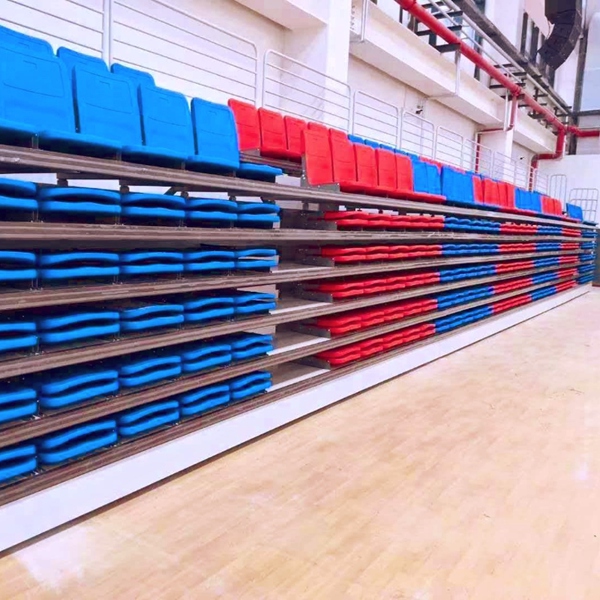
How Electric Telescopic Bleachers Work
The core mechanism relies on a series of interlocking bench units mounted on precision-guided rails. A central electric motor drives the entire array through a synchronized chain or belt system. When activated, the bleachers smoothly extend outward from their stored position, creating multiple rows of elevated seating. Advanced models feature variable speed control, allowing venue managers to adjust deployment speed based on time constraints or noise restrictions.
Safety mechanisms are built into every system. Obstruction sensors immediately halt operation if something blocks the moving bleachers. Load cells monitor weight distribution across the structure, preventing overloading beyond certified capacity. Many manufacturers also integrate emergency manual override systems, ensuring the bleachers can be operated even during power failures.
Key Advantages Over Manual Systems
Manual telescopic bleachers require significant physical effort to deploy, often needing two or three staff members working in coordination. Electric systems eliminate this labor requirement entirely. A single operator can manage the entire process from a wired or wireless control panel. This automation reduces setup time from hours to mere minutes, making it practical to reconfigure seating multiple times per day for different events.
Consistency is another major benefit. Manual deployment often results in uneven spacing or misaligned rows, creating safety hazards and uncomfortable viewing angles. Electric systems use programmable logic controllers (PLCs) to ensure every deployment is identical, maintaining proper row spacing and alignment automatically. This precision extends the system's lifespan by preventing mechanical stress caused by improper setup.
Applications Across Venue Types
Schools and universities represent the largest market for electric telescopic bleachers. Gymnasiums that host physical education classes during the day can transform into competition venues for evening games without permanent seating taking up valuable floor space. The ability to fully retract seating also facilitates maintenance activities like floor refinishing or equipment storage that would be impossible with fixed bleachers.
Community centers and multipurpose arenas also benefit significantly. These venues often host trade shows, conferences, and social events that require unobstructed floor space. Electric telescopic bleachers allow a single facility to serve wildly different functions without compromise. Some manufacturers even offer curved or angled configurations to accommodate unique architectural constraints or sightline requirements.
Installation Considerations and Planning
Retrofitting an existing facility with electric telescopic bleachers requires careful structural assessment. The floor must support concentrated point loads from the bleacher supports, which can exceed several tons when fully loaded with spectators. Reinforced concrete slabs are ideal, while wood or elevated floors may require additional structural reinforcement before installation.
Electrical infrastructure is equally important. Most systems operate on standard three-phase power, but the control systems and safety features require reliable electrical connections. Manufacturers typically recommend dedicated circuits with surge protection to prevent damage from power fluctuations. Some facilities also opt for backup power systems to ensure bleacher operation during outages, particularly for venues hosting paid ticket events.
Working with an experienced manufacturer ensures proper load calculations, electrical integration, and compliance with local building codes. Reputable suppliers provide detailed engineering drawings, on-site supervision during installation, and comprehensive operator training. This professional support minimizes downtime and ensures the system operates safely within its certified parameters for decades of reliable service.
References:
ASTM F2970-13 Standard Guide for Design and Manufacture of Telescopic Seating
International Code Council (ICC) Building Code Section 1029 for Grandstands
National Federation of State High School Associations (NFHS) Facilities Manual
ISO 9001:2015 Quality Management Systems - Seating Manufacturing Standards